The UK Is About to Approve Nearly 3,000 CBD Foods
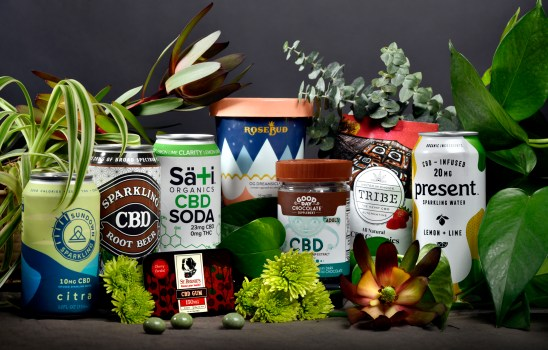
According to British media reports, on August 28, the UK Food Standards Agency (FSA) announced that it would conduct a 12-week public consultation to discuss the authorization of three applications covering nearly 3,000 CBD isolate products.
After a long five-year wait, this marks the final step towards the UK becoming the first country to formally regulate non-intoxicating hemp extract products, with the European Industrial Hemp Association (EIHA) calling it a "key milestone in confirming the safety of hemp-derived CBD."
Just six weeks ago, the new Food Standards Agency (FSA) committee met with industry stakeholders to discuss a concrete action plan to move this forward, and so far, that promise appears to be being delivered.
the First Batch Of Products Has Entered the Final Stage of the Novel Food Approval Process
Currently, three product applications have passed the "risk management" stage, which means that the UK Food Standards Agency (FSA) is preparing to make recommendations to government ministers to formally authorize the sale of these products, becoming the first regulatory agency in the world to successfully implement the relevant approval procedures for this type of product.
It is reported that these three files, numbered RP07, RP350 and RP427, were the first batch of application files that passed the risk assessment process last year. The first two files received their first positive safety assessment results in April, while RP427 followed in August. The details are as follows:
On April 30, 2024, Pureis obtained a safety assessment with file number RP07, for a total of 11 products;
On April 30, 2024, Cannaray obtained a safety assessment with file number RP350, for a total of 43 products;
On August 15, 2024, the European Industrial Hemp Association (EIHA) Alliance obtained a safety assessment with file number RP427, for a total of 2,718 products.
The CEO of UK CBD producer Pureis praised the UK Food Standards Agency and said: "Since submitting our first CBD novel food application in January 2020, we have spent ten years and invested heavily in comprehensive clinical safety and toxicology studies. This important progress sets a new global standard for CBD regulation, which we hope will be replicated around the world."
Daniel Kruse, President of the European Industrial Hemp Association (EIHA) and CEO of EIHA projects GmbH, said: “Years of collaborative work and research have brought us to where we are today. The completion of the safety assessment and now entering the final risk management phase shows that our collaboration has been very successful. The next few months will be crucial as we must ensure that this framework truly supports the industry and consumers.”
Public Consultation Phase: “Details Matter”
On August 28, 2025, the UK Food Standards Agency (FSA) announced the launch of a 12-week public consultation period, which aims to shape the key elements of a request for ministerial approval. This is likely the most critical stage in the process to date, as it will inform and guide the regulatory pathway for CBD products in the coming years and may influence the model used elsewhere in the world.
As many of the regulations awaiting approval remain highly controversial, this will be the regulator's last-ditch effort to resolve some of the issues. All three applicants have received draft risk management advice from the UK Food Standards Agency (FSA).
Over the next three months, the public consultation will seek to determine the terms of the authorization, such as the food categories allowed, the acceptable daily intake (ADI) of 10 mg/day, and the required safety labeling.
As Francesco Mirizzi, Managing Director of the European Industrial Hemp Association (EIHA), noted: “It is important to emphasize that the public consultation period is crucial: we will be raising key points to ensure that the final authorisation, definitions and conditions for CBD novel foods are fit for purpose, viable for businesses, and safe and transparent for consumers.”
The UK Food Standards Agency's consultation launched on August 28, 2025, and will run until November 20, 2025. The consultation will invite feedback on the three apps and will also include food businesses, trade associations and enforcement agencies in England, Wales and Northern Ireland. A parallel process will also be conducted by Food Standards Scotland (FSS) later in the summer.
The consultation seeks views on the proposed authorisation terms, including permitted uses, labelling and safety conditions, and any evidence on the economic or consumer impact of authorising CBD foods.
Under the Windsor Framework, authorised CBD products sold on the UK market will also be eligible to be sold in Northern Ireland through the Northern Ireland Mobile Retail Scheme, but companies in Northern Ireland will not be allowed to produce their own CBD food products.
The public can submit responses via an online survey or email from the Food Standards Agency (FSA). Once the questionnaire is closed, the agency and Food Standards Scotland (FSS) will publish a summary of the responses within three months and provide final advice to ministers based on this feedback before any mandates are made.
According to the UK Cannabis Trade Association (CTA), which plays a key role alongside the EIHA in engaging with regulators on behalf of industry stakeholders, a number of key issues will be at the forefront of discussions in the coming months:
Daily intake: A fixed 10 mg/day limit does not reflect differences in body weight; a mg/kg model could provide more accurate guidance.
- Product range: Limiting approvals to CBD isolate and synthetic CBD could exclude broad-spectrum hemp products favored by consumers, driving demand for an unregulated market.
- Labeling: A full warning statement may not be practical for small packs; a tiered model is recommended, with core packaging information and extended information provided via a QR code or leaflet.
- THC limit: Given the variability of testing, the proposed 0.00001% w/w threshold is impractical and inconsistent with the Home Office's 1 mg/container exemption, requiring harmonization.
- Data protection: Five years of exclusivity could disadvantage SMEs that rely on publicly listed companies; an equivalence route would help balance innovation and fair access.
- Enforcement: The division of responsibilities between local authorities (novel foods) and the police (controlled substances) creates complexities; stakeholders advocate for a joint agreement between the Food Standards Agency and the Home Office.
In a significant shift towards transparency and proactiveness, the Food Standards Agency will now decide whether to approve the applications once the consultation is complete and the terms of the authorisation are finalised.
By improving the regulatory framework, daily intake limits, THC review specifications, adjusting labelling requirements and providing fair access for small and medium-sized enterprises, the FSA can ensure that regulation brings stability and confidence without stifling innovation or consumer choice.
END
Good News! Another New Cannabinoid Has Been Discovered
Germany Launches First Football Team Sponsored by Cannabis Brand
Related Article