Important Breakthrough! A New Type Of Cannabinoid Has Been Discovered.

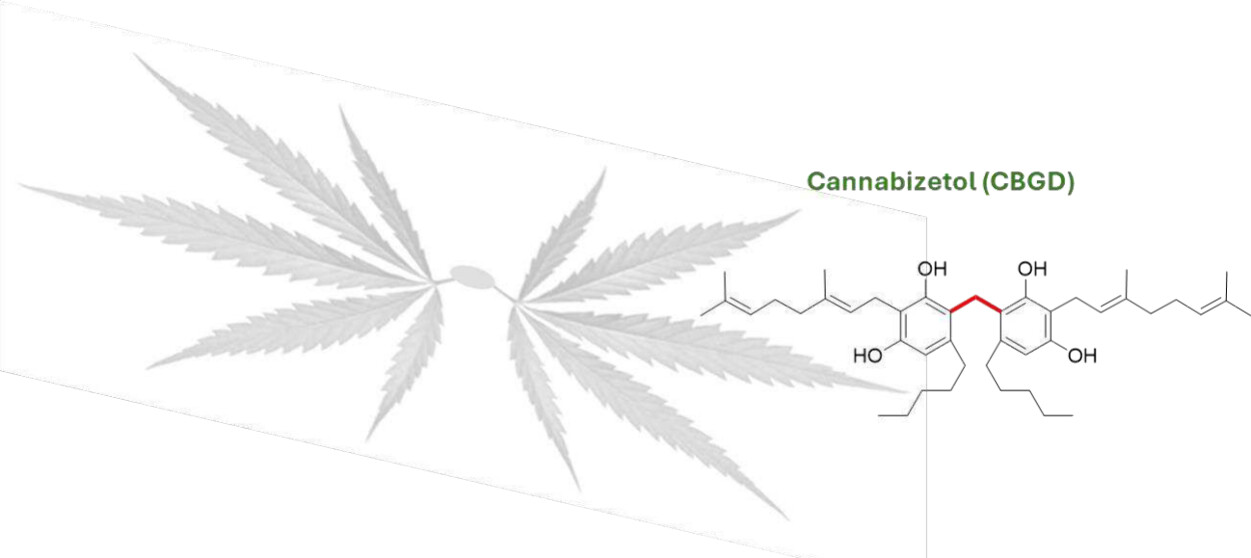
Recently, South Korean researchers announced that they have successfully identified a new cannabinoid derived from the cannabis plant—cannabielsoxa—as well as several other cannabinoid compounds, which were "discovered for the first time in C. sativa flowers."
The study was conducted by a team of 14 members from Wonkwang University, the Korean Ministry of Food and Drug Safety, Kyung Hee University, Kookmin University, and the National Institute of Horticultural and Herbal Science, among other government agencies and universities. The research team evaluated the anti-tumor effects of 11 compounds from cannabis on neuroblastoma cells and found that 7 of these compounds "exhibited strong inhibitory activity."
The researchers stated that this discovery represents "the first step in developing drugs to treat neuroblastoma." Neuroblastoma mainly affects young children, accounting for approximately 6% of all pediatric cancers. It is the most common solid tumor in children and the most prevalent malignant tumor during the first year of human life.
This paper was published in the journal Pharmaceutics this month. It stated that researchers utilized chromatography techniques to isolate these compounds, examined their molecular structures, and assessed their toxicity to neuroblastoma cells using metabolic testing methods.
The report states: "This study successfully isolated a new cannabinoid, cannabielsoxa, along with six known cannabinoid compounds, as well as a new dihydroporphyrin compound—132-hydroxy-pheophytin ethyl ester—and three other dihydroporphyrin compounds, all of which were discovered for the first time in the flowers of C·sativa.
Researchers found that these substances, along with five other known cannabinoids—Cannabidiol (CBD), Cannabidiolic Acid (CBDA), Cannabidiolic Acid Methyl Ester (CBDA-ME), Delta-8 THC, and Cannabichromene (CBC)—"could be considered as potential compounds with anti-neuroblastoma effects."
The paper pointed out that the results of anti-tumor analysis indicated that "cannabinoid compounds exhibit stronger inhibitory effects on neuroblastoma cells compared to dihydroporphyrin compounds." However, the new cannabinoid cannabielsoxa is not among the compounds identified by researchers as having potential toxicity to neuroblastoma cells.
Also this month, American researchers published what they described as "the largest meta-analysis to date on medical cannabis and its effects on cancer-related symptoms." The results revealed an "overwhelming scientific consensus" on the therapeutic effects of cannabis.
This meta-analysis was published in the journal Frontiers in Oncology and covers data from 10,641 peer-reviewed studies. The authors stated that the number of studies included in this review is more than ten times that of the second-largest review addressing the same topic. The findings indicate that "the scientific community has reached a strong and increasingly growing consensus on the therapeutic benefits of cannabis," the report states, "particularly in the context of cancer treatment."
Given the current state described in the report, where research on the therapeutic potential of cannabis is "scattered and inconsistent," the authors expressed their aim to "systematically evaluate the existing medical cannabis literature, with a focus on its therapeutic potential, safety, and role in cancer treatment."
"We anticipated controversy would arise. However, we found that the scientific community has reached an overwhelming consensus," said Ryan Castle, the lead author of the study and chief researcher at the Whole Health Oncology Institute, in a statement. "This represents one of the most clear and compelling validations by the scientific community to date regarding the use of medical cannabis in cancer treatment."
The Institute for Comprehensive Tumor Health stated in a press release that the meta-analysis shows, "For every study suggesting that cannabis is ineffective, there are three studies indicating its efficacy. This 3:1 ratio, especially in a rigorous field like biomedical research, is not just uncommon—it's extraordinary."
The institute added, "The level of consensus found here is comparable to, or even surpasses, that of many Food and Drug Administration-approved drugs."
Another study published in February this year focusing on medical marijuana patients in Minnesota found that cancer patients using marijuana reported "significant improvements in cancer-related symptoms." However, the study also pointed out that the high cost of marijuana could pose a financial burden for patients with less stable economic conditions, raising "questions about the affordability and accessibility of this treatment."
The National Cancer Institute (NCI) previously estimated last year that approximately 20% to 40% of cancer patients undergoing treatment are using medical cannabis products to manage cancer and its treatment-related side effects.
The agency stated: "As more states legalize marijuana for medical use, marijuana products are becoming increasingly popular among cancer patients. However, research on which marijuana products can safely and effectively alleviate cancer symptoms and treatment-related side effects has lagged far behind."
The studies cited in the article by the National Cancer Institute include a series of scientific reports published in the journal JNCI Monographs. A total of 14 articles detail the findings of federally funded cannabis research, which focused on patients from cancer centers designated by more than a dozen institutions nationwide. These centers are located in regions where cannabis is legal, legal only for medical purposes, or remains illegal.
Overall, nearly one-third (32.9%) of patients reported using cannabis, with respondents indicating that they primarily used it to treat cancer and related symptoms, such as insomnia, pain, and mood changes. The report stated that its most common benefits were "relief from pain, improved sleep, reduced stress and anxiety, and alleviation of treatment side effects."
Furthermore, another recent study published in the journal *Discover Oncology* concluded that various cannabinoids, including THC, CBD, and CBG, "demonstrate strong potential as anti-cancer agents through multiple mechanisms," capable of limiting tumor growth and metastasis. However, the authors acknowledged that incorporating cannabis into cancer treatment still faces certain obstacles, such as regulatory restrictions and the need to determine optimal dosages. The anti-cancer effects of cannabinoids require further investigation.
END
The Report On The State of UK Drug Policy Sparks Strong Attention, With The Mayor of London Expressing Support for The Decriminalization of Cannabis.
Two Major UK Regulatory Agencies Have Issued Updates On CBD Regulation: The FSA Has Made Concessions, While The MHRA Has Drawn Clear Boundaries.
Related Article