Breaking News! The United Nations Takes Action Again, with China's Support and the United States Abstaining.
Before reading this article, it is recommended to first familiarize yourself with HHC.
What exactly is HHC?
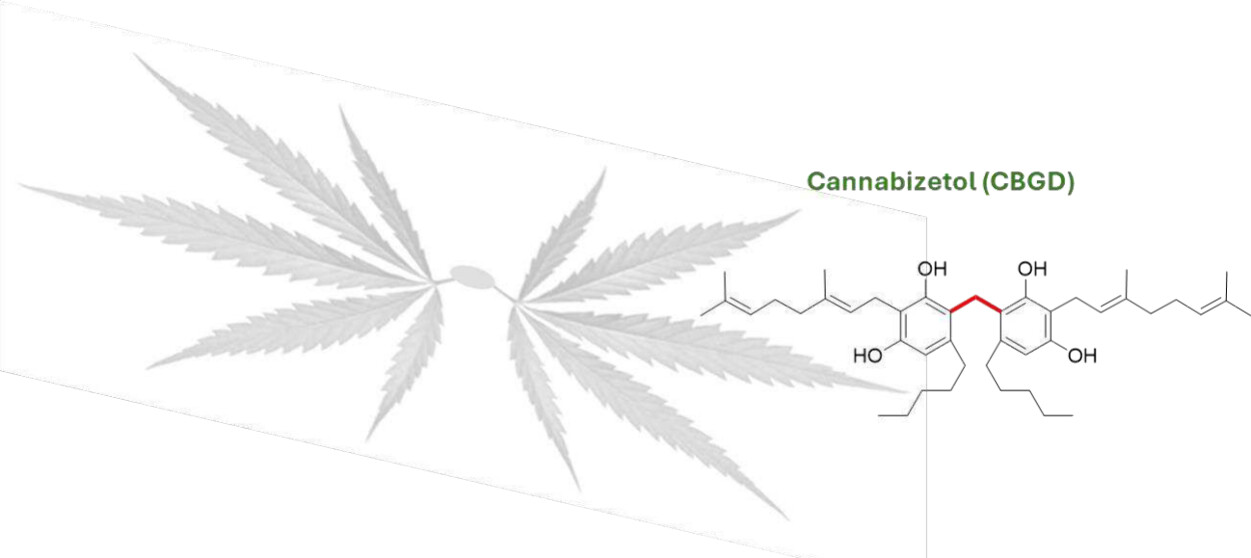
Hexahydrocannabinol (HHC) is a hydrogenated derivative of tetrahydrocannabinol (THC), classified as a novel semi-synthetic cannabinoid with psychoactive properties. Chemically, it resembles THC, thereby inducing intoxicating effects similar to those of THC. HHC can be synthesized through the acid-catalyzed cyclization of cannabidiol (CBD), followed by the hydrogenation of tetrahydrocannabinol (THC).
In 1940, Roger Adams first reported the synthesis and biological activity of HHC. HHC is capable of binding to the cannabinoid receptor CB1 in the human body, including the cannabinoid receptors in the brain. These cannabinoid receptors are part of the endocannabinoid system, which is crucial and responsible for many of your daily bodily functions, ranging from sensation and thought to eating and sleeping.
Compared to Delta-9 THC, HHC exhibits lower potency. However, due to the absence of clear regulations and comprehensive human safety studies, its potential for addiction is a cause for concern. Additionally, the varying isomer ratios in commercially available HHC products have raised significant safety issues, such as abuse and addiction, dizziness leading to falls or fainting, increased risk of car accidents, and heightened risk of mental health disorders. Consequently, numerous health agencies and professionals have issued warnings advising caution in its use.
Under normal circumstances, HHC remains in the human body for a period ranging from several days to several weeks, depending on factors such as metabolism, dosage, and frequency of use. The detection window varies from 1-3 days for occasional users to over 30 days for frequent users, particularly in urine tests.
Since HHC is a newly emerging cannabinoid, it has gained popularity in recent years due to its psychoactive properties and legalization in various regions. It is often marketed as a legal alternative to THC, and its use has now become widespread to the point of being excessive.
Currently, HHC may have been permitted to enter popular holiday destinations such as Croatia, Slovenia, Spain, Portugal, Malta, Greece, and Cyprus, as well as Ireland, Luxembourg, Moldova, and Romania. Since the early 2020s, HHC vaporizers have also been openly sold in cannabis accessory shops and convenience stores across North America and Europe.
The United Nations Commission on Narcotic Drugs (CND) voted to prohibit the cannabis compound hexahydrocannabinol (HHC) under an international treaty. All participating countries, except for the United States, voted in favor of adding this substance to Schedule II of the 1971 Convention on Psychotropic Substances.
However, the United States abstained from voting. Officials stated in a subsequent declaration that they "could not vote" in favor of HHC's proposal as well as another proposal to classify carisoprodol as a Schedule IV controlled substance.
The statement said, "Although the United States supports the use of an international control system to make scientific decisions on international drug control, we are unable to vote on these proposals. Nevertheless, both substances are already controlled in the United States to a degree sufficient for the country to fulfill the international obligations arising from the decisions made by the United Nations Commission on Narcotic Drugs (CND) today."
The statement did not provide further explanation as to why the United States was unable to cast a vote in favor.
At the same time, the United Nations Commission on Narcotic Drugs (CND) also voted to regulate four other non-cannabis compounds under international law.
The United Nations Office on Drugs and Crime (UNODC) posted on social media, stating that these actions by the UN Commission on Narcotic Drugs are "critical decisions regarding the control of harmful substances. These decisions have a significant impact on global drug policies, law enforcement, and public health."
As explained by a representative from the World Health Organization (WHO) prior to the vote, the cannabis plant "contains trace amounts of the psychoactive cannabinoid HHC," "but the reality is that people typically use products synthesized from cannabidiol (CBD)." The official noted that HHC is sometimes sprayed onto cannabis flowers with low THC content because its effects "are similar to those produced by Delta-9 THC."
In the United States, the Drug Enforcement Administration (DEA) has determined that HHC is not a naturally occurring cannabinoid. In a 2023 letter, Terrance Boos, the head of the DEA's Drug and Chemical Evaluation Section, stated that HHC "is not naturally occurring in the hemp plant and can only be obtained synthetically, thus it does not fall under the definition of legal hemp."
In fact, the World Health Organization had not previously reviewed this substance, and it has never been subject to international control.
In its recommendation supporting international regulatory actions, the World Health Organization stated: "The WHO has taken note of a significant amount of information disclosed, indicating that the substance has been manufactured clandestinely, poses a threat to public health, and lacks recognized therapeutic benefits."
The WHO added that HHC "has been identified in several countries among drivers under the influence of drugs, adults, and in the clinical treatment and analysis of drug poisoning in children, including cases where it has been confirmed as the sole substance involved."
The countries that voted to include HHC in Schedule II of the international treaty for control include Algeria, Argentina, Armenia, Australia, Austria, Bangladesh, Belgium, Brazil, Canada, Chile, China, Colombia, Côte d'Ivoire, the Dominican Republic, Finland, France, Ghana, Guatemala, India, Indonesia, Italy, Japan, Kenya, Lithuania, Malta, Mexico, Morocco, the Netherlands, Nigeria, Hungary, Peru, Poland, Portugal, South Korea, Russia, Saudi Arabia, Singapore, Slovenia, South Africa, Spain, Switzerland, Thailand, Trinidad, Tunisia, the United Kingdom, Tanzania, Uruguay, and Zimbabwe.
Additionally, the World Health Organization is set to review the classification of coca leaves (the source of cocaine), which has drawn attention from advocates who are concerned that coca leaves may be reclassified.
Regarding the coca leaf, as reported by Filter, the World Health Organization is faced with three possible options: to conclude that the coca leaf should remain in Schedule I, to recommend its transfer to the less restrictive Schedule II, or to propose the complete removal of coca from the treaty schedules.
Additionally, the High Commissioner for Human Rights at the World Health Organization called upon the international community at the United Nations late last year to abandon punitive criminal drug policies and stated that the global war on drugs "has utterly failed."
These comments were issued following a statement released earlier last year by the United Nations Special Rapporteur, experts, and working groups, which claimed that the war on drugs "has resulted in a series of serious human rights violations, as documented by numerous UN human rights experts over the years."
The statement pointed out that the United Nations Special Rapporteur on human rights issues has released a so-called "landmark" report, encouraging countries to abandon the criminal war on drugs and instead adopt harm reduction policies—such as decriminalization, supervised consumption sites, drug checking, and the widespread availability of overdose reversal medications like naloxone. Simultaneously, it also advocates for moving towards "alternative regulatory approaches" for currently controlled substances.
In 2023, 19 Latin American and Caribbean countries issued a joint statement, acknowledging the need to rethink the global war on drugs and shift focus towards "life, peace, and development" in the region.
Another report by a United Nations Special Rapporteur states that "the 'war on drugs' can largely be understood as a war against the people." "It disproportionately affects those living in poverty and often overlaps with discrimination against marginalized groups, ethnic minorities, and indigenous peoples."
In 2019, the United Nations System Chief Executives Board for Coordination (CEB), representing 31 UN agencies including the United Nations Office on Drugs and Crime (UNODC), adopted a position stipulating that member states should implement science-based, health-oriented drug policies, namely decriminalization.
Despite shifts in attitudes towards certain drugs among U.S. states and local governments, the United States remains a primary funder in the international fight against drug trafficking.
A report released last year by two organizations critical of the war on drugs indicates that since 2015, U.S. taxpayers have invested $13 billion in funding global anti-narcotics efforts. This has often come at the expense of global poverty alleviation initiatives, while also leading to violations of international human rights and environmental damage.
Regarding the 1971 Convention on Psychotropic Substances and its Schedule II
The "1971 Convention on Psychotropic Substances" is a United Nations treaty signed on February 21, 1971, in Vienna, Austria, aimed at regulating psychoactive substances such as amphetamine-type stimulants, barbiturates, benzodiazepines, and hallucinogens. This was necessitated by the fact that the "1961 Single Convention on Narcotic Drugs" did not prohibit many emerging psychotropic substances, as its scope was limited to drugs with effects similar to cannabis, coca, and opium.
In the 1960s, the aforementioned anesthetic drugs were ubiquitous, and government authorities actively opposed their use for various reasons, believing that drug abuse not only had negative impacts on health but also led to a decline in moral standards. The 1971 Convention on Psychotropic Substances came into effect on August 16, 1976, which included import and export restrictions as well as other rules aimed at limiting the use of these substances to scientific and medical purposes.
As of 2013, 183 member states had become parties to the treaty. The treaty is not self-executing; each country must enact domestic legislation to establish penalties and restrictions. Although not all signatory states restrict all listed substances, many laws have been passed to implement or exceed the requirements of the convention, including Canada's Controlled Drugs and Substances Act, the United Kingdom's Misuse of Drugs Act 1971, and the United States' Controlled Substances Act.
The *United Nations Convention Against Illicit Traffic in Narcotic Drugs and Psychotropic Substances* contains provisions aimed at ending the international trafficking of drugs covered by the Convention. Signed in 1988, this treaty regulates precursor chemicals for drugs controlled under the 1961 *Single Convention on Narcotic Drugs* and the 1971 *Convention on Psychotropic Substances*. It also strengthens provisions for combating money laundering and other drug-related crimes. Together, these three UN drug control conventions establish the current international framework for drug control.
The 1971 Convention on Psychotropic Substances classifies controlled substances into four schedules, ranging from Schedule I (the most restrictive) to Schedule IV (the least restrictive). The 1971 Convention on Psychotropic Substances is accompanied by a list of psychotropic substances and their corresponding schedules. The text of the Convention does not formally describe the characteristics of substances in each schedule, which differs from the United States' 1970 Controlled Substances Act, which establishes specific criteria for each schedule in the U.S. regulatory system.
Four International Schedules
Appendix I:
Substances listed in Appendix I primarily refer to drugs that pose significant risks to public health and whose therapeutic value has not yet been recognized by the United Nations Commission on Narcotic Drugs (CND). These include isomers of THC, synthetic psychedelics such as LSD, and certain natural psychedelics like substituted tryptamines. Additionally, amphetamine-type stimulants (ATS), such as cathinone, MDA, and MDMA (ecstasy), also fall under this category.
Appendix II:
Appendix II substances include amphetamine-type stimulants with certain therapeutic uses, such as Delta-9-THC tetrahydrocannabinol (including its synthetic form dronabinol), amphetamine, and methylphenidate, among others. This time, HHC will be included in Annex II for regulation.
Appendix III:
The third category of substances includes barbiturates with rapid or average effects, which, despite their therapeutic benefits, are subject to serious abuse. Additionally, this category encompasses potent sedative benzodiazepines such as flunitrazepam, and certain analgesics like buprenorphine. The sole amphetamine-type stimulant (ATS) in this classification is norepinephrine.
Appendix IV:
The fourth category of substances primarily includes weaker barbiturates, such as phenobarbital and other hypnotics, anti-anxiety benzodiazepines (excluding flunitrazepam), as well as some milder stimulants (such as modafinil and armodafinil). This category encompasses over a dozen amphetamine-type stimulants (ATS), including the amphetamine substitute phentermine.
A 1999 report by the United Nations Office on Drugs and Crime indicated that Schedule I is entirely distinct from the other three schedules. According to the report, Schedule I primarily includes hallucinogenic substances produced in illicit laboratories, such as LSD, whereas the other three schedules mainly consist of legally manufactured pharmaceuticals.
Indeed, compared to the 1961 Single Convention on Narcotic Drugs, the 1971 Convention on Psychotropic Substances imposes stricter restrictions on the import and export of substances listed in Schedule I. The Convention stipulates that such substances can only be transported in international trade if both the exporter and importer are government authorities or agencies specifically authorized for this purpose. In addition to this very stringent certification and identification of suppliers and recipients, relevant export and import permits must also be obtained in each individual case.
END
The European Union has finally spoken: Hemp-derived CBD is not classified as a narcotic and can be freely traded between member states.
Consumption Trends and Market Insights of Hemp-Derived THC
Related Article