Will the UK government’s “Brexit reboot” drag the CBD industry back to square one?
Earlier last month, under a major overhaul of new leadership, the UK Food Standards Agency (FSA) clarified THC limits, acceptable daily intake (ADI) guidance and the expected timeline for businesses still waiting for formal regulatory approval for their products.
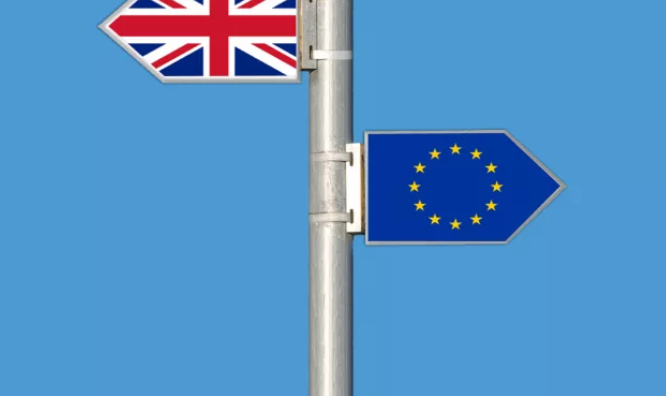
However, Wednesday's talks shifted focus to the Starmer government's efforts to reach a sanitary and phytosanitary (SPS) agreement with the EU in an effort to boost trade with the UK's closest trading partner. These complex negotiations are still in their early stages, but depending on their outcome, the UK could be brought into closer compliance with EU regulations on CBD.
While this may create opportunities for UK CBD businesses to access the EU market, it may also further delay the process given the EU’s current inaction.
While many questions remain unanswered and frustration among business owners is palpable, the FSA’s decision to convene this meeting to inform the industry of developments regarding potential risks represents a significant shift in transparency and engagement from the regulator.
What is the SPS Agreement?
The Sanitary and Phytosanitary (SPS) Agreement is an international treaty that sets out how countries should apply health and safety regulations to protect humans, animals and plants, while preventing these rules from becoming a hidden form of protectionism.
Overseen by the World Trade Organization (WTO), the SPS framework encourages countries to align their rules with international standards but allows them flexibility to go beyond them if scientific evidence justifies it.
In May, Britain and the European Commission held "exploratory talks" in Brussels to explore potential future bilateral trade and synergy as part of the Starmer administration's so-called "Brexit reset" initiative.
The UK will automatically adopt EU rules on plant products and other agricultural products, but the UK will have to agree on a "dynamic coordination" mechanism to ensure that the UK can automatically adopt relevant EU rules.
The UK can request limited exceptions, but only if:
a) standards are not lowered;
b) EU products are not adversely affected on the UK market;
c) EU import rules are not violated.
What does this mean for CBD?
Despite its missteps, the UK Food Standards Agency’s CBD Novel Foods Scheme remains the only one in the world dedicated to regulating CBD as a food.
In Europe, the European Food Safety Authority (EFSA) has effectively placed a moratorium on 19 European novel food applications currently under review until “multiple data gaps” regarding the effects of CBD on human health are filled. Since then, the EFSA has made little progress and has called for more data, including human toxicology studies, to determine the safety of CBD.
This has put UK and EU CBD regulations at odds with each other, and despite UK efforts to push the process towards official approval, full harmonization with the EU could also put the industry back to square one.
According to the UK Food Standards Agency, there are three possible outcomes to the CBD negotiations, but it’s worth noting that these are expected to take several years and reportedly will not immediately impact their work on the public list and novel food applications.
Result 1: Full dynamic coordination with the EU (no exceptions): The UK will comply with EU regulations on CBD, and the EU will issue market authorizations for itself and the UK.
Result 2: Dynamic coordination with exceptions (including a complete exception for CBD): The UK will maintain an independent CBD regulatory policy, and the UK Food Standards Agency's CBD project will continue as planned.
Result 3: Failure to reach an agreement: Continue to maintain the status quo.
Indeed, handing power back to the European Food Safety Authority (EFSA) would be a painful ordeal for businesses that have already spent tens of thousands of dollars applying in the UK and waiting five years.
A representative at the meeting told industry stakeholders: "The FSA remains committed to implementing the scheme to support market authorisation for CBD products. To fully achieve this, no changes will be made and we will need to negotiate an exception. However, the final outcome depends on factors outside our control, namely the UK government's overall negotiating position and the final agreement reached with the EU."
The UK’s Food Standards Agency explained that the EU has set three clear conditions for the UK to obtain any exemptions covering CBD products under the Sanitary and Phytosanitary (SPS) Agreement.
First, any agreement must not lower standards than those set by the EU. Second, it must not negatively impact EU imports entering the UK market. Third, and perhaps most challenging in practice, is that only goods that comply with EU regulations can enter the EU market.
However, even if these three tests are met, agreement is far from guaranteed.
"In reality, meeting these tests does not guarantee a deal," the FSA added. "It is also important to understand that the EU will not be willing to give the UK what it considers an unfair competitive advantage, or to treat the UK in any way more favourably than its member states."
Looking ahead, the UK Food Standards Agency (FSA) was unable to provide any specific roadmap due to the lack of clarity on when negotiations would begin. However, delegates noted that “the UK government hopes to reach an SPS agreement as soon as possible, with negotiations expected to take place next year.”
Once any deal is reached, there is likely to be a "substantially long" transition period.
While the UK Food Standards Agency (FSA) has clearly made a conscious effort to keep the industry informed of upcoming developments, even more so given that they are beyond their control, this is likely to create further uncertainty, complexity and worry for CBD business owners.
END
Industry Disruptors Are Coming! THC-Free Hemp Varieties Are Coming Soon
Major Discovery! The Global CBD Market may be Disrupted
Related Article