Massive Data Reveals: How Digital Printing is Reshaping the Folding Carton Industry and Helping Brands Achieve Growth!
author: Annie
2025-10-17

Growth Trend
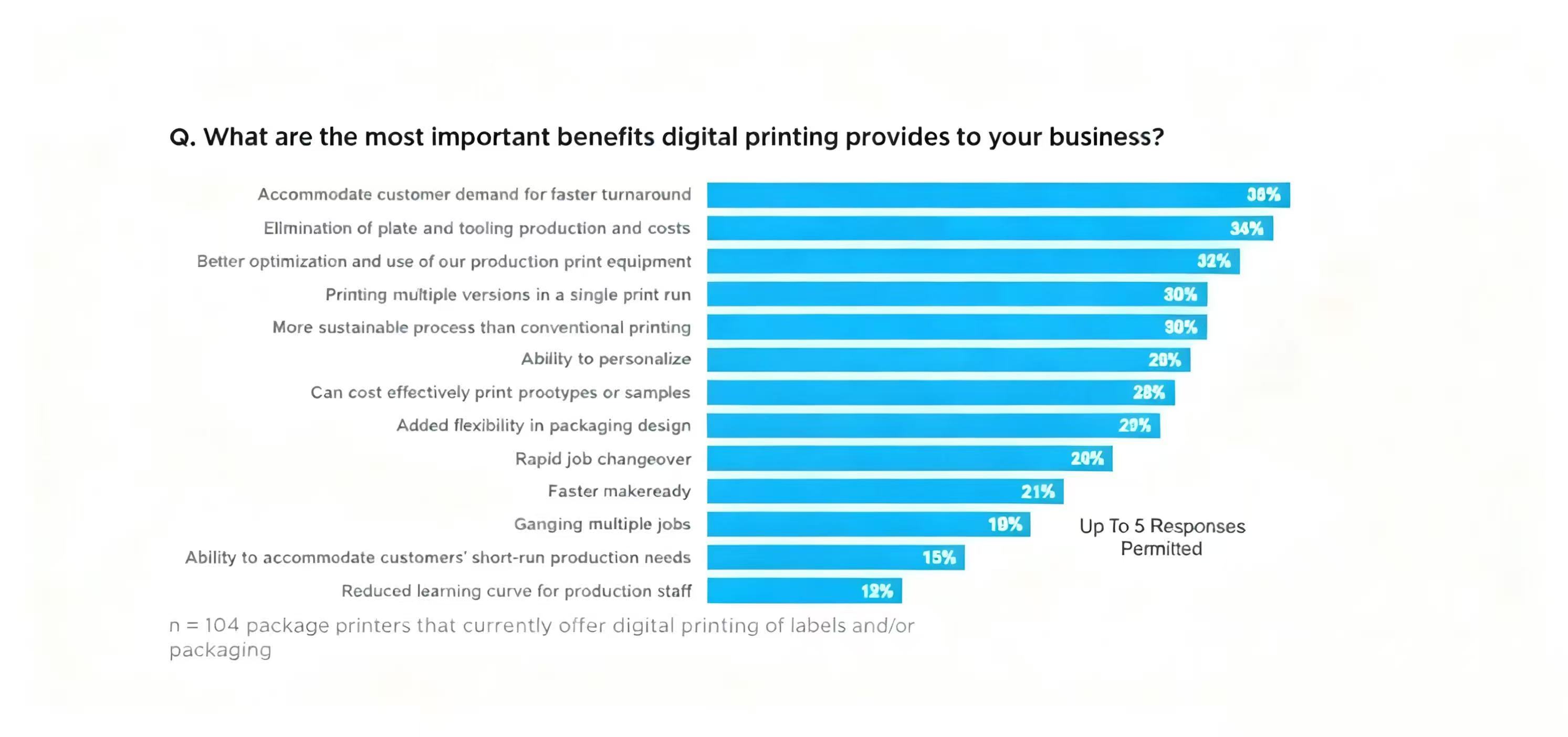
In recent years, the trends affecting the application of digital printing technology for folding cartons have become increasingly evident. A report by Strait Research pointed out: "With the continuous innovation of digital printing technology, more and more retailers, brands, and home goods supply chain partners are favoring folding cartons that can display exquisite patterns to attract more consumers."
One of the main factors driving this trend is the continuous improvement of digital printing technology. Shahar Lev Ari, HP Indigo Folding Carton Product Marketing Manager, stated, "Digital printing technology ensures excellent print quality, meeting the high standards required by industries such as luxury goods, cosmetics, and pharmaceuticals."
Matt Brooks, Packaging Director at Agfa Digital Printing Solutions, expressed a similar view: "Technological advancements have led to the continuous emergence of high-speed digital printing solutions, significantly increasing the adoption rate and market share of digital printing. At the same time, existing technologies are constantly improving, with print quality now comparable to offset printing and cost-effectiveness significantly enhanced."
With the continuous advancement of technology and the improvement of printing quality, digital printing solutions have become capable of efficiently handling large-volume printing tasks, meeting the market's growing demand for functions such as version control. As Matt Brooks, Head of Packaging at Agfa's Digital Printing Solutions, stated, "Digital printing offers us a digital alternative that can handle both large-volume and short-run jobs, catering to the diverse needs of the market."
Furthermore, the optimization of logistics has also promoted the widespread application of digital printing. Amir Shalev, Director of Market Development at Landa, pointed out: "We have observed that in order to better meet market demands, the trends of on-demand production and inventory reduction are becoming increasingly evident. Companies hope to achieve more flexible production through digital printing to respond promptly to market changes."
Shahar Lev Ari, HP Indigo Folding Carton Product Marketing Manager, also stated: "Modern supply chains emphasize flexibility, with just-in-time production and on-demand printing becoming mainstream. Digital printing can meet this demand, helping companies minimize inventory and shorten delivery times, thereby achieving efficient production and delivery."
"As market demands for faster product delivery continue to rise, the flexibility of digital printing becomes particularly important," noted Amir Shalev, Director of Market Development at Landa.
In recent years, the trends of nearshoring and reshoring have become increasingly evident, with developed markets emerging as the forefront for the adoption of advanced digital printing systems.
Shahar Lev Ari, the HP Indigo Folding Carton Product Marketing Manager, added, "Digital printing enables rapid production and short-cycle delivery, allowing brands to quickly respond to market changes and consumer demands."
As multi-SKU products and short print cycles become the norm, consumer demand for personalized packaging is also growing. Lev Ari explained, "Digital printing technology offers brands the possibility to customize packaging for specific audiences, thereby creating more appealing and memorable products."
Shalev further pointed out that the more attractive and personalized designs brought by digital printing can effectively enhance customer loyalty. For example, methods such as quick response codes, promotional activities, and brand stories can better engage with consumers.
Sustainability is also a significant factor driving the development of digital printing. Shalev emphasized, "Consumers are increasingly concerned about eco-friendly packaging and sustainable development." Brooks agreed with this, noting, "As society pays more attention to sustainable development, people are starting to consider the circular economy more, which is driving the digital printing industry toward a more environmentally friendly direction. For example, using lighter paper materials to make them more suitable for digital printing processes."
With increasingly severe environmental issues, enterprises are paying more attention to sustainable development. Shahar Lev Ari, HP Indigo Folding Carton Product Marketing Manager, stated: "Compared to traditional offset printing, digital printing generates less waste, aligns better with environmental principles, and effectively reduces the carbon footprint. By minimizing waste and inventory, enterprises can achieve on-demand production, avoiding the creation of excessive redundant products."
Amir Shalev, Director of Market Development at Landa, also emphasized the importance of recyclable cardboard in packaging materials. He noted, "Recyclable cardboard, including various recyclable options, is gradually replacing traditional plastic packaging as the preferred choice in the consumer goods and fast-moving consumer goods markets. This trend is not only welcomed by brands and distributors but also aligns better with consumers' environmental awareness."
In addition, increasingly stringent regulatory policies are driving companies to adopt sustainable packaging. Shalev added, "Many businesses have set clear goals to make all their packaging recyclable or compostable by 2025."
Challenges faced by digital printing of folding cartons
Although the digital production of folding cartons holds great promise, it still faces some challenges.
Currently, digital printing technology in the folding carton sector is actively addressing challenges related to time-to-market, cost, and automation. Matt Brooks, Packaging Director of Agfa's digital printing solutions, stated, "Although digital printing technology is advanced, its market adoption has been relatively slow. Compared to traditional analog printing, digital printing faces certain challenges in terms of price and operational costs, particularly with ink costs needing to be factored into the return on investment. Additionally, issues such as automation, continuous feeding, and job changeovers are pressing challenges that digital printing must resolve. While analog printing has accumulated extensive experience in these areas, digital printing is expected to catch up in automation through collaborations with third-party equipment manufacturers."
The competition in the folding carton processing industry is becoming increasingly intense. Amir Shalev, Director of Market Development at Landa, pointed out: "Against the backdrop of current macroeconomic uncertainties, companies are facing pressure from rising costs while simultaneously having to increase product prices. To stand out in the market, packaging companies must provide a higher level of service, including ensuring supply chain stability and shortening delivery cycles."
Shahar Lev Ari, HP Indigo Folding Carton Product Marketing Manager, believes that the transition from analog to digital printing requires companies to undergo a comprehensive adjustment. "Companies need to invest resources in training and development to ensure that new technologies can be seamlessly integrated into existing production processes."
With the growing demand for instant production and environmentally friendly solutions, digital printing technology for folding cartons will have broader development prospects. This mature technology is attracting more and more packaging companies to adopt it.
Top 10 Soft Packaging Industry Trends to Watch in 2025 and Beyond!
Say Goodbye to Mediocrity! Why Is Your Packaging 10 Times More Expensive? The Secret Lies in These 7 Digital Decoration Techniques!
Related Article