54% of young people are willing to pay extra! Revealing how premium packaging captivates the younger generation through "tactile appeal"!
author: Annie
2025-11-07

The e-commerce packaging for high-end products is significantly different from that of ordinary goods. Richard Klaessmann, European Sales Director of Packaging at Sappi, points out that premium packaging aims to provide consumers with a high-end experience that matches the value of luxury brands. It must not only withstand the challenges of transportation but also deliver stunning visual and tactile sensations the moment the package is unwrapped by the consumer.
"This unforgettable unboxing experience is inseparable from the use of high-end materials," Kleizman emphasized. "These materials possess excellent whiteness, brightness, and color reproduction capabilities, perfectly showcasing the brand's refined texture, thereby captivating consumers' senses and strengthening the brand image. E-commerce packaging often faces rigorous challenges during transportation. To protect the products while maintaining the brand's premium image, Sappi's Fusion Topliner is an ideal choice. Pressing this paper into corrugated cardboard or grayboard effectively enhances the durability of the packaging, preventing damage during transit."
The Fusion Topliner is specially designed not only to exhibit a luxurious texture but also to meet highly customized demands. Through processes such as foil stamping and embossing, it can add unique visual effects to packaging, further enhancing the brand image and helping the product stand out among numerous competitors.
The demand for high-quality food packaging is high.
According to data from Innova Market Insights, over the two-year period from July 2022 to June 2024, the number of product launches emphasizing the "premium" concept in global food and beverage products increased by 6%. Global market research shows that flat pouches are the dominant form of food packaging currently, while plastic is the most commonly used packaging material. Additionally, more than one-third of products feature recyclable labeling.
Among these products emphasizing "premium," food packaging such as coffee and desserts is the most common. Choi Ji-won, Customer Success Analyst at Innova Market Insights, pointed out that the "cakes, pastries, and sweets" subcategory has experienced the most rapid growth, with a compound annual growth rate as high as 107%. The growth rates for meat products and bulk chocolate chips are also quite impressive. Geographically, Western Europe, Asia, and North America are the main regions for the launch of premium products. Among them, Africa has the fastest growth rate, reaching 30%, followed by Australia (14%) and Asia (9%).
High satisfaction and loyalty for premium products
Sappi's high-end packaging series is not only visually appealing but also practical and sustainable, perfectly meeting the unique needs of premium brands. "Sappi's paper and cardboard solutions are specifically designed for high-quality displays and brand image, making them highly popular in industries such as cosmetics, luxury goods, and high-end electronics," Klaizman stated.
The reason our high-end packaging can enhance consumer satisfaction and brand loyalty, especially for e-commerce, is that packaging is the first physical touchpoint where consumers interact with the product. Sappi's products offer excellent printability, post-press processing capabilities, and handling performance, providing an exceptional presentation for the product. Imagine a pair of high-end earphones nestled quietly in an exquisite packaging box made from Sappi paper materials.
At the 2024 London Packaging Week, high-end products, particularly spirits, became the focus of discussion. Industry experts delved into how to make premium products stand out in a competitive market amid evolving regulatory landscapes. Stephen Richmond, Head of ESG Implementation at UK packaging and logistics supplier Hunter Luxury, particularly emphasized the unique challenges the luxury industry faces in terms of packaging.
"Luxury packaging has always focused on a luxurious unboxing experience, while its environmental impact is often overlooked. This balance is difficult to achieve," Richmond said. "We want people to enjoy the pleasure brought by luxury goods while also being environmentally responsible, but achieving this is a huge challenge for the luxury industry."
Sustainability remains the core.
Sappi's Algro Design is a flagship packaging solution renowned in the market for its high whiteness, vibrant colors, and delicate texture. Kleizman explained, "Sappi's Fusion Topliner virgin fiber liner delivers a perfectly bright white surface across various cardboard applications, while ensuring reliable print quality and outstanding shelf appeal. Both the Algro Design and Fusion Topliner series provide a pleasing tactile experience, leaving a strong impression on consumers the moment they open the packaging, thereby enhancing brand recognition."
Sustainability is a key highlight of Sappi's products. Sappi's packaging papers and boards are made from renewable wood fibers sourced from sustainably managed forests and are certified with either FSC Mix Credit or 100% PEFC, meaning they are not only eco-friendly but also fully recyclable. To further enhance product differentiation, Sappi recently launched the Fusion Embossed series. This embossed liner paper mimics the textures of denim and linen, adding a unique tactile experience to packaging design and making the packaging of high-end products more eye-catching. Klaasman noted, "This new tactile experience offers a fresh option for premium product packaging."
Top 10 Soft Packaging Industry Trends to Watch in 2025 and Beyond!
Related Article


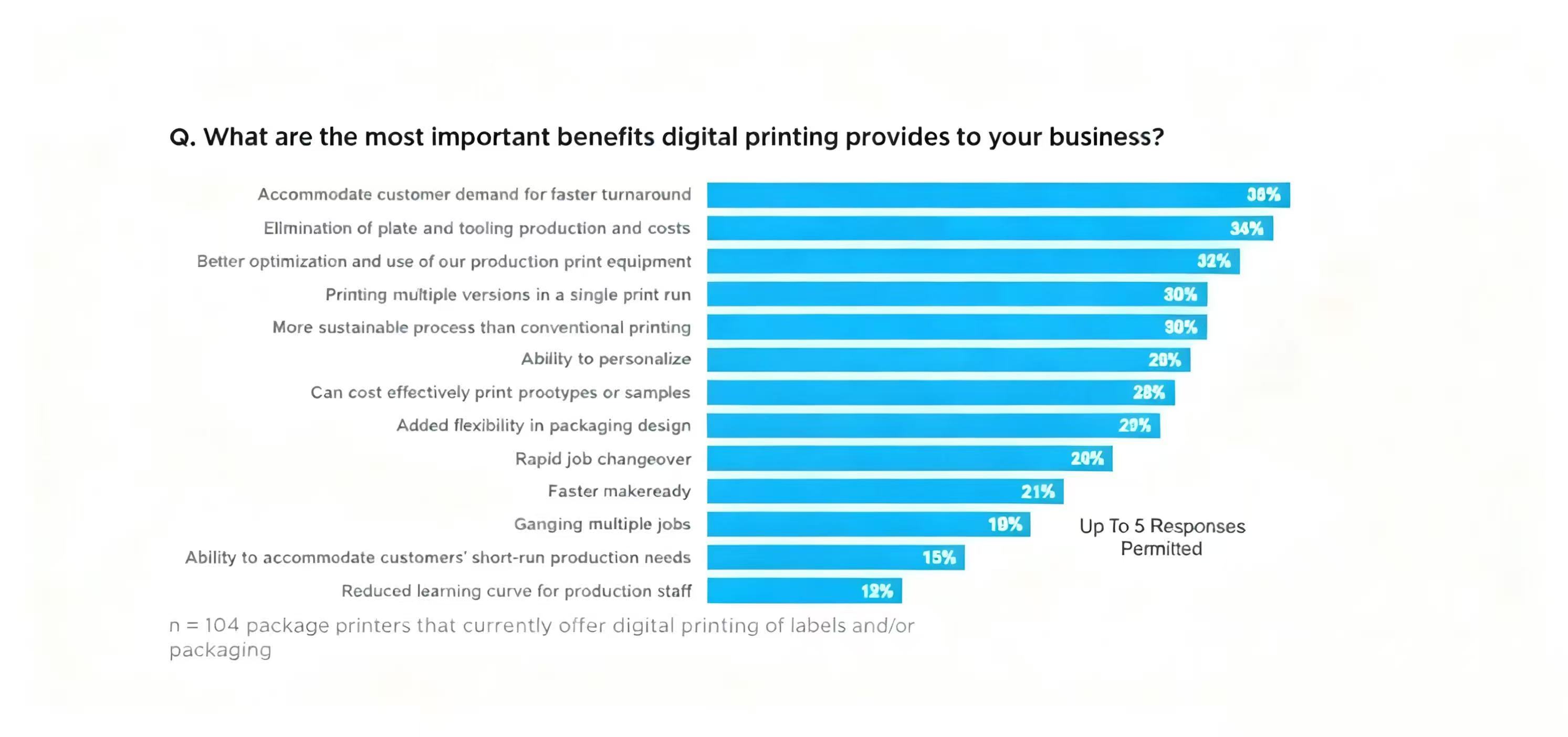
Digital printing is showing strong growth momentum in the packaging sector, with folding carton packaging holding particularly immense potential. According to a report by Straits Research, the global folding carton packaging market reached a scale of $141.43 billion in 2022. It is projected to grow to $208.73 billion by 2031, with a compound annual growth rate of 4.42%.
Massive Data Reveals: How Digital Printing is Reshaping the Folding Carton Industry and Helping Brands Achieve Growth!