Top 10 Soft Packaging Industry Trends to Watch in 2025 and Beyond!
author: Annie
2025-10-31

What is flexible packaging? Flexible packaging refers to packaging materials that can change shape at any time during filling or use. Common forms include bags, pouches, liners, films, and rolls. The primary materials used are typically paper, plastic, film, aluminum foil, or composite combinations thereof.
A recent report predicts that the global flexible packaging market will reach nearly $400 billion by 2029. The growing popularity of flexible packaging is due to its cost-effective, convenient, and sustainable way of promoting and packaging products for brands and retailers.
The following trends will highlight how the soft packaging industry is evolving towards greater sustainability, innovation, and consumer-centricity, driven by technological advancements, market changes, and shifts in consumer preferences.
Sustainability. Approximately 141 million tons of plastic packaging are produced globally each year, with growing attention from consumers and regulators on reducing its climate impact. Although flexible packaging is also a plastic product, its weight is significantly lower than that of rigid plastic containers or glass. As a result, flexible packaging can substantially reduce carbon emissions during transportation while also occupying less space in landfills, further diminishing its carbon footprint. Recent advancements have enabled brands to use fully biodegradable bio-resins. Although bio-resins are currently more expensive, their cost is expected to decrease as applications expand and production volumes increase. The concept of a circular economy is driving innovation in the overall sustainability of the flexible packaging industry, though this also presents a complex challenge for manufacturers.
Convenience and Portability. With the accelerating pace of life, the demand for flexible packaging such as stand-up pouches and resealable bags continues to grow. This has driven innovations in more convenient and portable flexible packaging, such as Bostik's Reseal™ technology, reusable labels, and form-fitting stand-up pouches. Balancing sustainability while meeting convenience needs remains the biggest challenge in this field.
E-commerce. By 2027, e-commerce sales are projected to account for 23% of global retail sales, placing higher demands on the packaging of online products. As a result, flexible packaging has taken on greater responsibilities: it must be lightweight enough to reduce carbon emissions during transportation, while also protecting products, providing tamper-evident seals, and seamlessly integrating with brand identity and customer experience.
Regulatory Compliance. Factors such as food safety, product labeling, and environmental management are driving increasingly stringent regulatory requirements for flexible packaging manufacturers. To ensure compliance and mitigate risks, companies are investing in new technologies and processes. Additionally, legislation implemented by governments in response to macro-environmental factors, such as the UK government's plastic packaging tax, is further complicating the regulatory landscape.
Transparency and traceability. Both consumers and brands are demanding greater transparency and traceability throughout the entire supply chain. As a result, brands are integrating QR codes, blockchain technology, and other digital solutions to provide detailed product information, origin tracking, and sustainability certifications.
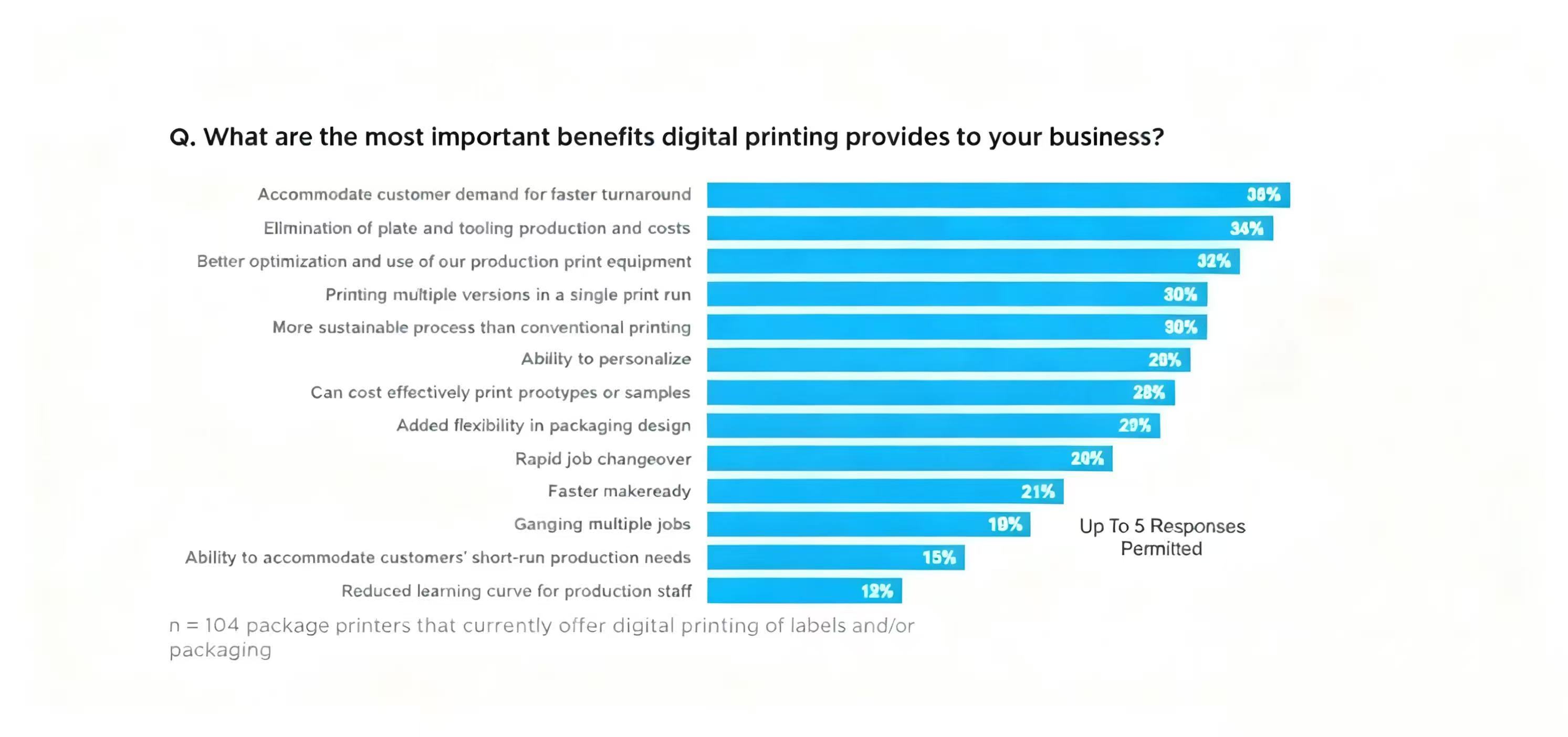
Digital Printing. In recent years, digital printing technology has developed rapidly. Compared with traditional offset printing, it offers higher print quality, shorter turnaround times, greater customization, and cost-effectiveness. Brands are leveraging digital printing technology to shorten printing cycles, manage version control, and personalize packaging, thereby enhancing consumer engagement.
Anti-counterfeiting measures. Counterfeiting and product tampering remain significant challenges in industries such as pharmaceuticals and food. Advanced technologies like holographic films, security inks, and tamper-evident seals are being widely adopted to curb counterfeiting and protect brand reputation.
Multilayer films: Reducing food spoilage and enhancing food safety. There is a growing demand for multilayer films with enhanced barrier properties to extend product shelf life and maintain freshness. Innovations in barrier coatings, high-performance resins, and active packaging technologies have enabled flexible packaging to effectively preserve product quality and prolong shelf life. Extensive research has shown that these cutting-edge barrier technologies and film formulations have saved the food industry billions of dollars in spoilage losses and significantly improved food safety levels.
Industry Mergers and Acquisitions. According to the report, the global paper and packaging industry announced 33 M&A transactions in the third quarter of 2023, with a total value of $1.4 billion. This trend is expected to continue as the overall market size of the packaging industry is steadily growing. Due to the high barriers to entry for new players, M&A activities may lead to an increasingly consolidated industry landscape, resulting in more large enterprises.
Achieving Balance Through Investment in Intelligent Software. Faced with the dual challenges of aging equipment and tight budgets, packaging manufacturers are shifting away from the traditional capital expenditure-heavy model for technological upgrades. An increasing number of companies are leaning toward software-driven solutions that enable operational improvements through operational expenditures, without the need for massive investments. This trend is reflected in the growing adoption of cloud-based applications, such as MES platforms, to modernize operations with fewer financial resources. This approach allows flexible packaging companies to maintain competitiveness, agility, and efficiency while avoiding the financial strain of comprehensive equipment upgrades. By 2025 and beyond, more companies are expected to bridge the gap between capital and operational expenditures through intelligent, scalable software solutions.
54% of young people are willing to pay extra! Revealing how premium packaging captivates the younger generation through "tactile appeal"!
Massive Data Reveals: How Digital Printing is Reshaping the Folding Carton Industry and Helping Brands Achieve Growth!
Related Article

54% of young people are willing to pay extra! Revealing how premium packaging captivates the younger generation through "tactile appeal"!

Digital printing is showing strong growth momentum in the packaging sector, with folding carton packaging holding particularly immense potential. According to a report by Straits Research, the global folding carton packaging market reached a scale of $141.43 billion in 2022. It is projected to grow to $208.73 billion by 2031, with a compound annual growth rate of 4.42%.
Massive Data Reveals: How Digital Printing is Reshaping the Folding Carton Industry and Helping Brands Achieve Growth!